On October 28–29, the delegation from Osh State University in Kyrgyzstan visited Nanjing Institute of Technology (NJIT). The two universities held talks with Phoenix Vocational Education Company and Nanjing Vocational College of Transportation Technology. The discussions focused on jointly launching overseas educational programs, enhancing cultural and people-to-people exchanges between China and other countries, and promoting industry-academia-research-application collaboration.
On the afternoon of October 28, Pu Lijie, Deputy Chair of the University Council of NJIT, led a joint visit with the Osh State University delegation to Phoenix Vocational Education Company. The three parties deliberated on advancing the “Chinese Language + Professional Fields” publishing project in Kyrgyzstan. Pu Lijie introduced the joint efforts of NJIT and Osh State University in cultivating international talents within the industry-academia-research-application framework. He expressed hope to leverage Phoenix Vocational Education’s expertise in professional publishing to develop high-quality, standardized “Chinese Language + Professional Fields” teaching materials and digital resource systems, jointly fostering educational achievements and building a publishing brand. Hu Xiaodong, Deputy General Manager of Phoenix Publishing & Media, affirmed the collaboration between the two universities and emphasized the commitment to empowering high-quality development of the Belt and Road Initiative through top-tier publishing. Bektur, Dean of the Faculty of Mathematics, Physics, Engineering, and Information Technology at Osh State University, noted that talent cultivation in “Chinese Language + Professional Fields” is a key focus for the university. He looked forward to collaborating with NJIT and Phoenix Vocational Education to develop a series of bilingual professional textbooks. The three parties also engaged in discussions on specific cooperative projects, agreeing to pilot the initiative with the “Data Science and Big Data Technology” program. They will jointly advance efforts in talent training schemes, curriculum systems, textbook development, and digital resource creation.
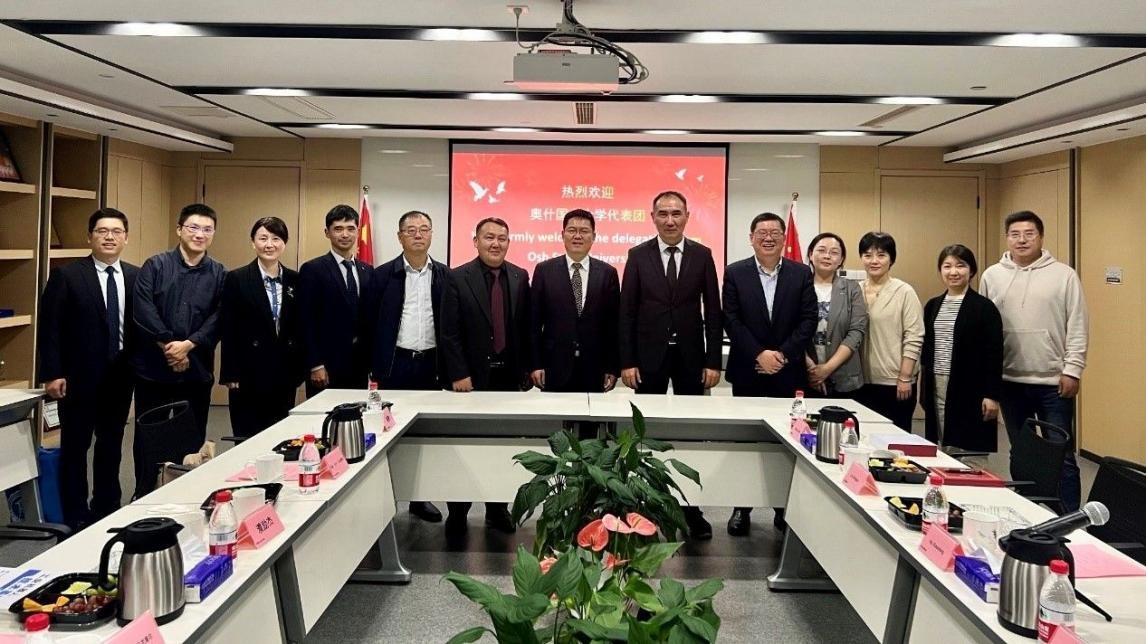
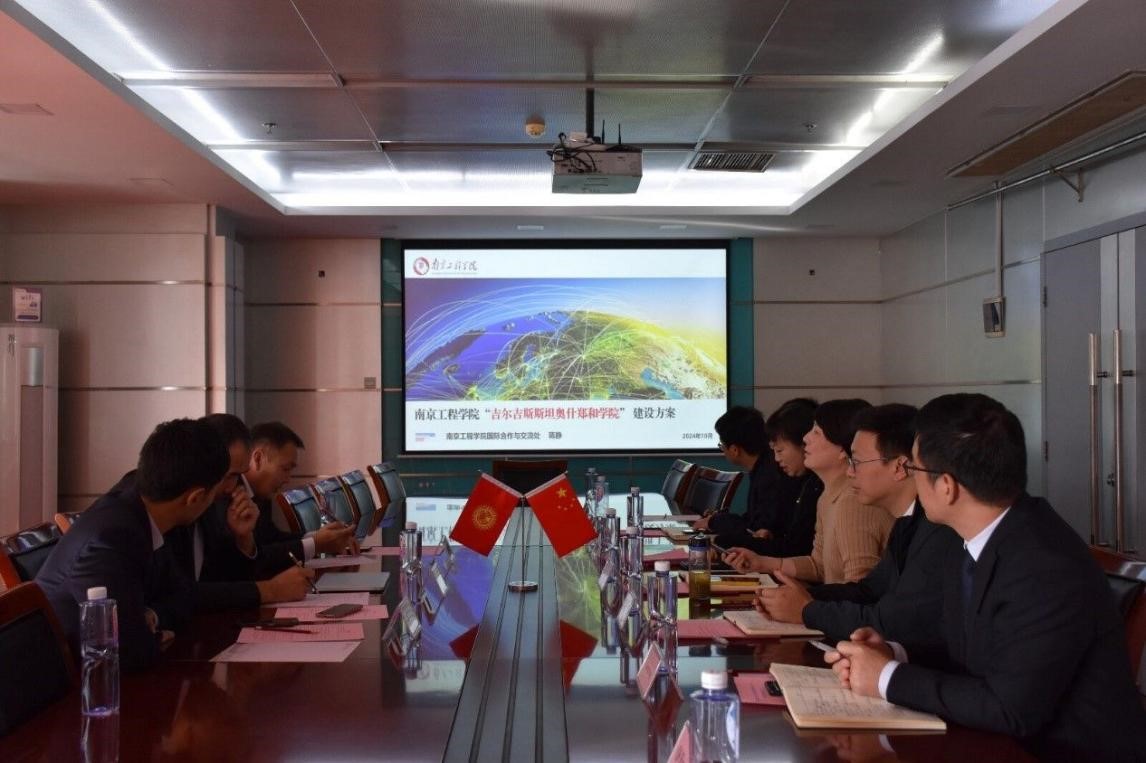
On the morning of October 29, NJIT convened a seminar on the overseas education project in Kyrgyzstan with Osh State University. At the meeting, representatives from the International Cooperation and Exchange Office outlined the specific plans, objectives, tasks, and support measures for the joint overseas educational initiative. They expressed hope to deepen practical cooperation under the framework of the Joint Educational Program Agreement, promoting the cultivation of engineering-applied technical and skilled talents and fostering multidimensional collaboration in industry-academia-research-application. Representatives from the School of Communication and Artificial Intelligence, the School of Integrated Circuits, and the School of Computer Engineering introduced their respective schools’ development history, educational characteristics, faculty strengths, disciplinary advantages, talent cultivation programs, scientific research and innovation, and international exchanges and cooperation. Prof. Bektur, Dean of the Faculty of Mathematics, Physics, Engineering, and Information Technology at Osh State University, provided an overview of the faculty and highlighted Osh State University’s recent progress in international cooperation, “2+2” international dual-degree programs, and laboratory collaborations with Chinese enterprises. The two universities engaged in in-depth discussions on specific pathways for overseas educational initiatives and reached multiple consensus points.
The delegation from Osh State University also visited the National Virtual Simulation Training Center for Roads and Bridges, the School of Rail Transit, and the on-campus training bases of the Department of Humanities and Arts at Nanjing Vocational College of Transportation Technology.
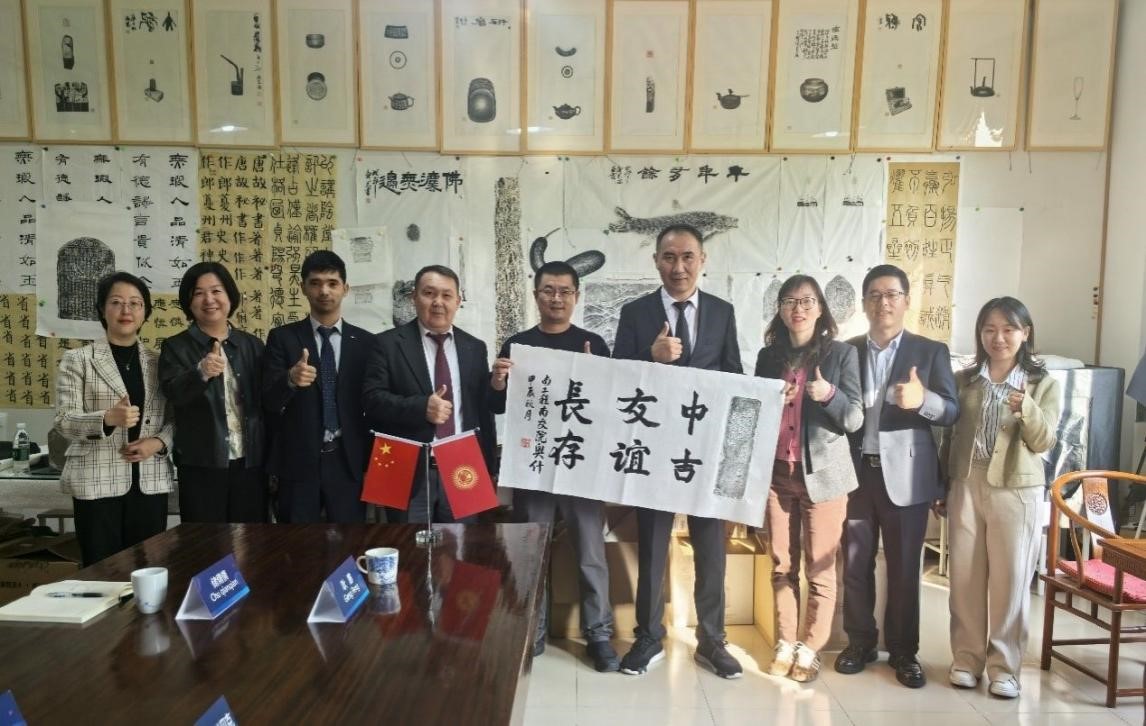
It is reported that NJIT and Osh State University signed the Joint Educational Program Agreement earlier this year. The collaboration focuses on five undergraduate programs—New Energy Science and Engineering, Electronic Information Engineering, Data Science and Big Data Technology, Logistics Management, and Artificial Intelligence—under a “2+2” joint education model. Both universities aim to deepen exchanges and cooperation through high-level mutual visits, academic partnerships, and joint training programs.